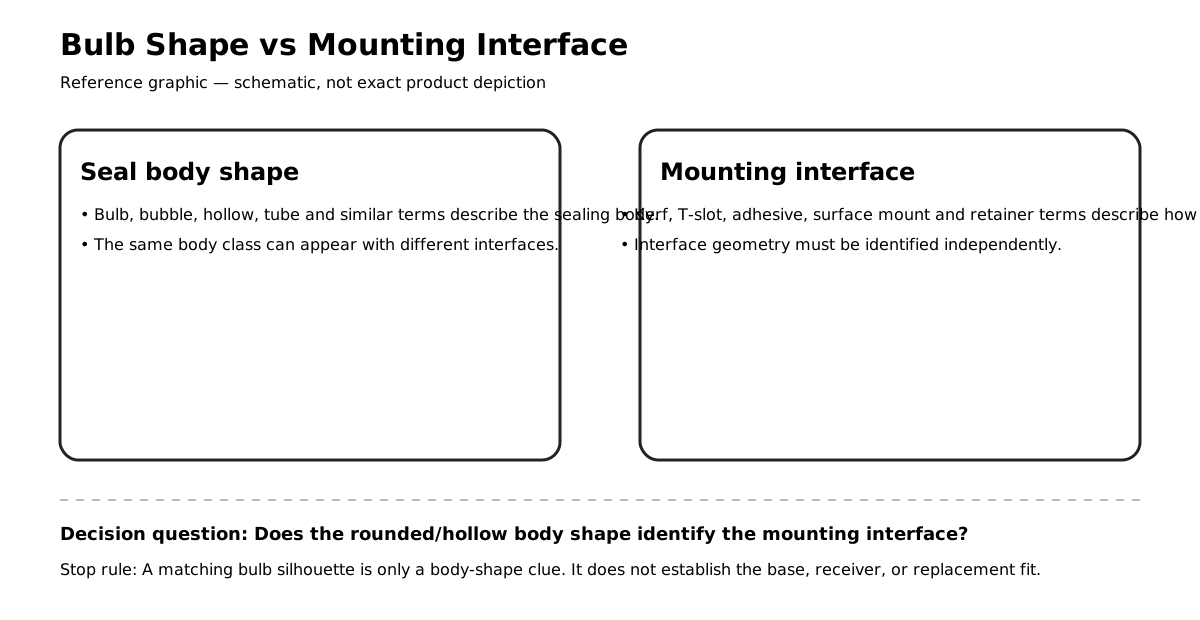

Quick decision: Match the mounting interface first, then measure the cross-section. Similar outer shapes are not evidence that two seals are interchangeable.
Decision question
Does the rounded/hollow body shape identify the mounting interface?
Seal body shape
- Bulb, bubble, hollow, tube and similar terms describe the sealing body.
- The same body class can appear with different interfaces.
Measure or record:
- body width/height
- chamber count if visible
- effective reach/orientation
Mounting interface
- Kerf, T-slot, adhesive, surface mount and retainer terms describe how the profile is held.
- Interface geometry must be identified independently.
Measure or record:
- stem/base/backing geometry
- channel/receiver geometry
- mounting method
Stop rule
A matching bulb silhouette is only a body-shape clue. It does not establish the base, receiver, or replacement fit.
Profiles to inspect next
- Kerf-in bulb — interface: kerf / push-in stem
- Hollow / multi-hollow bulb — interface: T-slot|kerf|adhesive|other documented base
- T-slot bulb extrusion — interface: T-slot / slide-in base
- Surface-mounted bulb / tube — interface: surface-fastened
- Adhesive-backed compression extrusion — interface: pressure-sensitive adhesive
- Single T-end bulb/body — interface: single-channel T-end retainer
How to verify your sample
Use the measurement guide for the geometry you can observe. If the mounting interface or a critical dimension differs, treat the profiles as different and stop before making a fit claim. Exact compatibility needs separate product- or application-specific evidence.
Provenance
- Source — Maryland Energy Administration, Weatherstripping — https://energy.maryland.gov/residential/pages/technicalassistance/weatherstripping.aspx — supports: Generic tension/V-strip, felt, pile, foam tape, reinforced foam, tubular gasket and door-seal terminology; application distinctions.
- Source — Schlegel, Weatherseal products: Q-LON, pile & extruded seals — https://www.schlegel.com/products/ — supports: Compression foam gasket, brush pile, fin-pile, extruded-seal technologies; kerf/surface/carrier fitment distinctions.
- Source — Ultrafab, T-Slot Extruded Seals — https://www.ultrafab.com/product/t-slot-extruded-seals/ — supports: T-slot as an insertion/interface family for extruded bulb profiles in window applications.
- Source — Ultrafab, Custom Plastic Extrusions | Profiles & Seals — https://www.ultrafab.com/product/custom-extrusions/ — supports: Distinct profile/interface labels including T-slot, kerf-mounted, leaf and multi-hollow bulb.
- Source — Ultrafab, Multi-Hollow Bulb Seals — https://www.ultrafab.com/product/multi-hollow-bulb-seals/ — supports: Hollow/multi-hollow bulb compression body; T-slot, kerf and adhesive-backed interface options.
- Source — Pemko / ASSA ABLOY, PK52 Series Kerf-in Weatherstrip — https://www.pemko.com/en/products/gasketing/perimeter-gaskets/product-details-nm.aehpdp-pk52-series-ag_pemko_303063 — supports: Kerf-in bulb weatherstrip as a door/window compression profile.
- Source — Action Industries, Vinyl T-End Bulb Weather Seals — https://action-ind.com/pro-t-style-vinyl-bulb-garage-door-bottom-seal/ — supports: Garage bottom T-end attachment terminology and separation of attachment end from bulb body.
- Source — Action Direct, Garage Door Bottom Seal Attachment Types: T-End, Bead-End, P-Bulb, & More — https://shopactiondirect.com/blog/garage-door-bottom-seal-attachment-types/ — supports: Trade terminology for T-end, bead-end, P-bulb, single/double-channel and specialty attachment profiles; treated as terminology evidence, not universal compatibility.
This comparison uses the cited public sources and keeps terminology, observed geometry and exact fit as separate claims. The included schematic is original and intentionally generic.