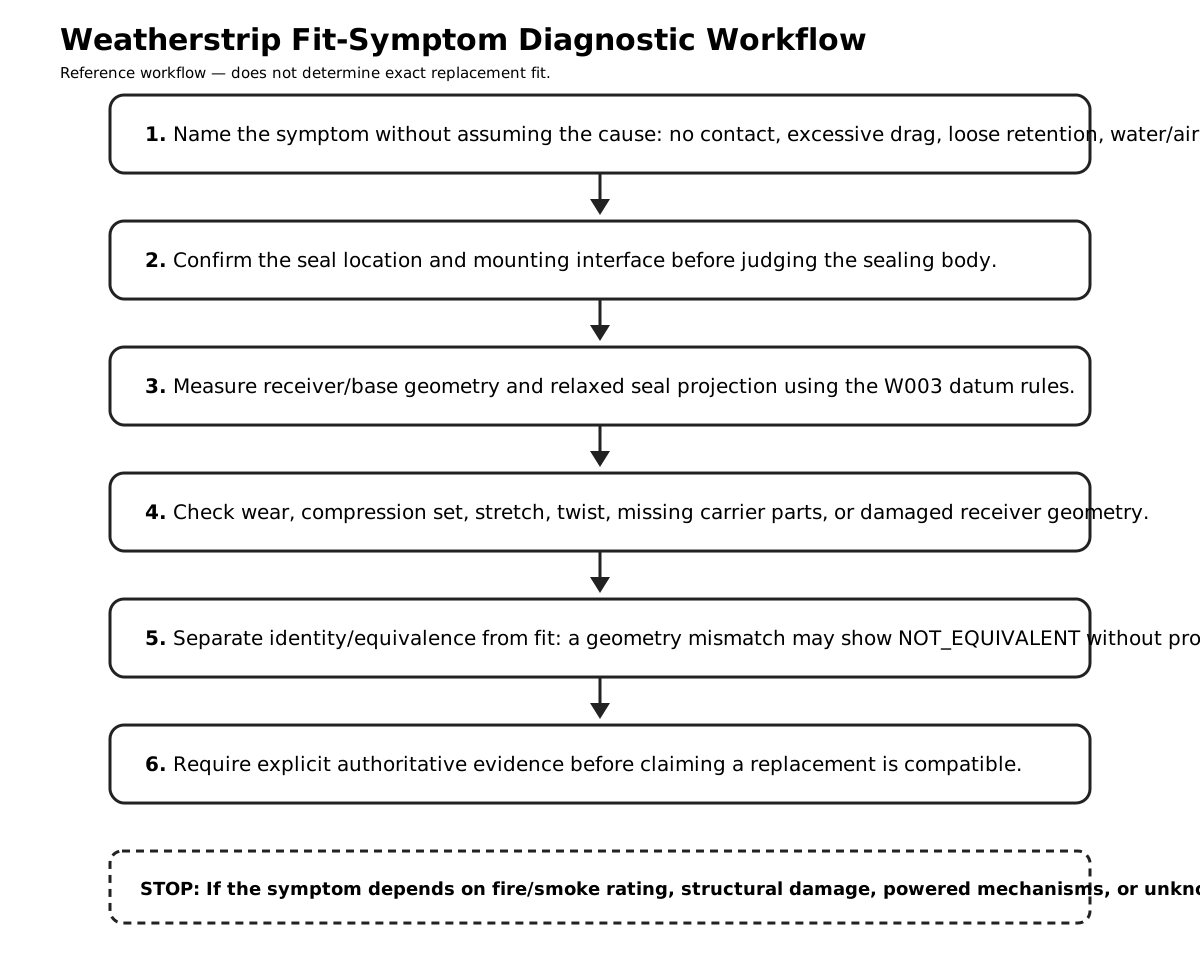
Symptom first; cause second
Write down the symptom exactly as observed: no contact, excessive closing force, rubbing/drag, seal pulling out of its receiver, adhesive lifting, rattling, visible light/gap, water/air path, torn fibres, flattened body, or another repeatable observation. A symptom can have more than one cause.

Diagnostic sequence
- Confirm the seal's location and movement.
- Confirm the mounting interface and whether the seal is fully seated.
- Record receiver/base geometry and the relaxed sealing-body geometry using Reference.
- Note wear, compression set, stretch, twist, missing fasteners/carrier parts, damaged channels or contaminated adhesive surfaces.
- Compare identity separately from fit. If two profiles have materially different interfaces or geometry,
not equivalentmay be supportable even when an application-wideincompatibleclaim is not. - Require an explicit manufacturer/application/supersession statement before upgrading a replacement relationship to Source-backed.
Common interpretation traps
- A door that is hard to close does not prove the seal is “too thick” without measuring gap and projection.
- A loose seal does not prove the body shape is wrong; the receiver/base geometry may be the mismatch.
- A visible gap does not prove a larger bulb is appropriate; alignment, receiver position and motion direction matter.
- Adhesive failure does not prove a generic adhesive-backed family is unsuitable; substrate, contamination and product-specific adhesive evidence are separate questions.
Related reference pages
DISCOVERY_TO_ATLAS→/profiles/DISCOVERY_TO_MEASURE→/measure/(Reference)
Evidence basis
the measurement method, the evidence and fit boundaries and canonical page routing. Exact compatibility remains not evaluated for exact fit unless a later source-backed fit claim is added.