Profile family · Garage bottom seal
Single T-end bulb/body Weatherstrip Profile
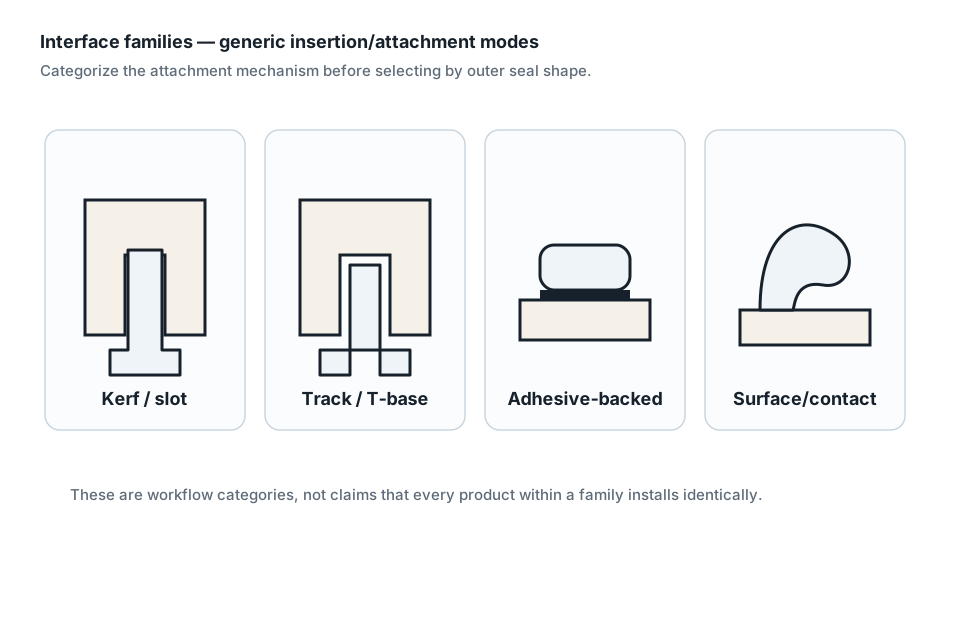
One T-shaped attachment feeds a single retainer channel and supports a bulb/flexible sealing body. This page identifies a generic family and the measurements needed to compare sites; it does not identify an exact replacement.
Generic profile family supportedExact replacement fit not checkedgarage-door
Identification snapshot
- Subtype
- Single T-end bulb/body
- Contact mode
- compression at floor
- Seal body
- bulb or flexible body
- Mount/interface
- single-channel T-end retainer
- Common terms
- single T-end, T-bulb, single-channel T seal
- Typical intent
- garage door bottom retainers designed for single attachment
Measure before comparing
| Measurement / observation | What to record | Capture rule |
|---|---|---|
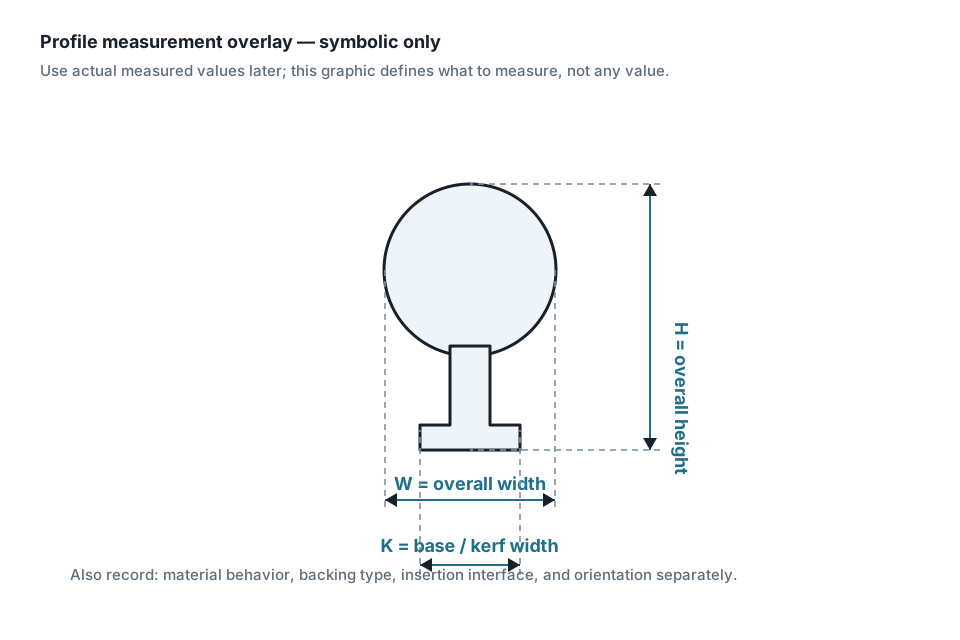
| T-end geometry | measurement notes (supplemental profile observation; do not substitute another Reference dimension) | Measure directly when possible; preserve original value/unit and uncertainty. |
| channel count | measurement notes (supplemental profile observation; do not substitute another Reference dimension) | Measure directly when possible; preserve original value/unit and uncertainty. |
| body width/height | bulb body width, bulb body height | Measure directly when possible; preserve original value/unit and uncertainty. |
| orientation | measurement notes + photo orientation | Measure directly when possible; preserve original value/unit and uncertainty. |
Do not infer: Do not infer interchangeability with double-channel T-end systems. No exact product compatibility, OEM identity, material chemistry, generation or supersession is implied.
Measurement workflow
- Stabilize the sample without stretching or deliberate compression.
- Choose and record the mounting/base datum.
- Record the tool and actual resolution before dimensions.
- Measure the base/interface before the soft sealing element.
- Capture relaxed geometry with minimal pressure.
- Measure the receiver separately when accessible.
- Record contact motion, insertion/compression direction, sample condition and uncertainty.
- Keep compatibility separate: geometry may narrow sites but does not prove fit.
Provenance
Source-backed evidence only. This page does not broaden the scope of the cited sources.
- Source — Action Industries, Vinyl T-End Bulb Weather Seals
https://action-ind.com/pro-t-style-vinyl-bulb-garage-door-bottom-seal/
Supports: Garage bottom T-end attachment terminology and separation of attachment end from bulb body. · accessed 2026-10-07 - Source — Action Direct, Garage Door Bottom Seal Attachment Types: T-End, Bead-End, P-Bulb, & More
https://shopactiondirect.com/blog/garage-door-bottom-seal-attachment-types/
Supports: Trade terminology for T-end, bead-end, P-bulb, single/double-channel and specialty attachment profiles; treated as terminology evidence, not universal compatibility. · accessed 2026-10-07
Scope rule: Measurements, generic profile identification and exact replacement fit are kept separate. Use cited sources and your receiver geometry before making a fit decision.
Useful next steps
- Garage Door Seal Profile Families — Profile family
- Measure Garage Door Bottom Retainers — Measurement guide
- Garage Door Weatherstrip Profiles — Application guide
- Weatherstrip Terminology Guide — Terminology guide
- Methodology — Methodology